We are halfway through Christina's dry period. It's been a month without the morning and evening milkings that kept me grounded in the day, a month of making the milk last, a month without learning the next thing to make good cheese. I'm trying to focus on the benefits of this rest time, but I'm not very good at living without what I want.
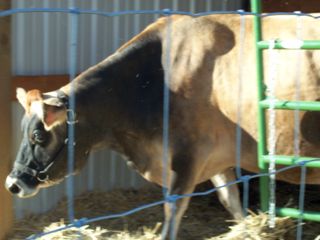
Christina and beefy have eaten the east pasture down and we moved them back. It's been four weeks and the west pasture looks decent. Christina knew just what was going on and headed right over; beefy needed a little more encouragement, but they immediately began feasting on the new fresh grass. It makes me laugh to see cows with heads down, rocking back as they plow through grass. They are celebrating eating too.
The book says that cows won't eat an entire pasture and don't expect them to. But our cows do. Today when we moved them off the east pasture it looked like it had been mowed clean. The last few days I've seen them out there working even the little blades. I worry that they're starving, so we check the hay feeder but they have enough. I think they just love fresh grass and they'll take a little bit as a snack, even while living of the dried stuff.
With them moved, it means that we have to scoop the cow pies to clean out the east pasture. Ack! When will we work that in? My husband's working on building a little harrower that will break up the cow pies and then we won't have to scoop as much. I wish he'd hurry.
With the fading sun, hanging the laundry requires a new kind of organization. The trees to the south, that provide such wonderful shade in the heat of the summer, now shade a much larger area, including the clothesline. With cooler temperatures and shorter days, it takes all day long to dry a load of laundry instead of just a few hours. We are limited to two loads a day and they must go up early in the morning. What I miss the most is the smell of sun-dried cloth.
Jerky has become everybody's favorite snack. My husband is trying to do jerky with some sliced meat, rather than hamburger. After making twenty or thirty thin slices, he says that hamburger is the better way to go. This meat will marinade for a day and then go into the dehydrator.
This sustainable living that we are doing sure does take a lot of work, but it feels like such relevant work and it is grounded in relationship. Thank you God for meaningful work.
We are a Catholic family of seven in Boise, Idaho raising our food on one-and-a-half acres, homeschooling, and looking for God in it all.
Showing posts with label sustainable living. Show all posts
Tuesday, October 19, 2010
Saturday, October 9, 2010
Tomatoes
We noticed a few tomatoes turning red so we ran out to get them before the irrigation comes tomorrow. Pretty soon the five-gallon harvest bucket was full and we were looking for another bucket. This is becoming routine — I think I'm going to pick a little and find a whole lot.
I already had a bunch of tomatoes in the freezer, so I couldn't just throw these in the freezer and deal with them later. While my husband and daughter made pizza for dinner, I blanched and skinned tomatoes as fast as I could. Tomato skins just slide off if they've been in a boiling water for a few seconds. (My nine-year-old took this gorgeous photo of tomatoes coming out of the boiling water, skins pulled back)
In the past I avoiding making tomato sauce because it had to boil for so long to get rid of the water. I read that if tomatoes are hung overnight, much of the water will come out. It's worth trying. We set up a hanging contraption in the pantry with a milk bucket to catch the drippings. There's already an inch of clear liquid in the bottom. Tonight we have two of these large bags hanging.
Just like the peppers, I started a bunch of tomatoes plants last spring, but lost track of which kinds they were. In June I just threw plants in the ground. In the middle of the big tomatoes we found arms of cherry tomato vines heavy with fruit. There's enough for several good snacks.
I already had a bunch of tomatoes in the freezer, so I couldn't just throw these in the freezer and deal with them later. While my husband and daughter made pizza for dinner, I blanched and skinned tomatoes as fast as I could. Tomato skins just slide off if they've been in a boiling water for a few seconds. (My nine-year-old took this gorgeous photo of tomatoes coming out of the boiling water, skins pulled back)
In the past I avoiding making tomato sauce because it had to boil for so long to get rid of the water. I read that if tomatoes are hung overnight, much of the water will come out. It's worth trying. We set up a hanging contraption in the pantry with a milk bucket to catch the drippings. There's already an inch of clear liquid in the bottom. Tonight we have two of these large bags hanging.
Just like the peppers, I started a bunch of tomatoes plants last spring, but lost track of which kinds they were. In June I just threw plants in the ground. In the middle of the big tomatoes we found arms of cherry tomato vines heavy with fruit. There's enough for several good snacks.
Monday, October 4, 2010
Eggs?
Only eight eggs yesterday. A few weeks ago we were struggling to keep up with a dozen a day, and then suddenly it dropped off.
This happened last summer. Late one day we discovered that the coop door had accidentally closed. We open it right up and laughed at the line up of hens at the nesting boxes. The next day egg production suddenly dropped.
Two days later we found a dead hen in the coop. The book said that sometimes hens die of being egg-bound. The hen doesn't lay her egg and it gets stuck. We think that's what happened, but because we weren't sure, we treated the hen like she died of disease and carefully wrapped the body in several layers of plastic before whisking it off to the garbage.
Afterward, we made sure the flock had lots of good quality feed and slowly the production came back up. It took weeks, but it did come back.
Now it's dropped again. We have one sick chicken, although she might be injured and not sick. But then, how would we know?! How do you tell a sick chicken?! They don't have noses that run. How could you tell if they were pale? I don't even know how to check for a chicken fever, and I don't think I'm interested in learning.
Then something else occurred to us. It's still warm, but we are on the other side of the equinox. The books say that chickens lay best with 14+ hour days. By the end of December when we'll have only nine hours of daylight, production will drop by more than half. In commercial egg farms they take care of that by using electric lights, but we're going to stay with the sun. Today we have eleven-and-a-half hours. Maybe our flock is on the normal decline from shorter days. We haven't gone a whole year with chickens so we are still learning how their normal cycles work.
I hope it's just normal seasonal decline.
The sick chicken is doing the same. My nine-year-old checks on her several times a day. This morning she went out to check on her again. When she came in I asked how Soody was doing. "The same," she said confidently. It's been a week with no change. Then I asked, "do you think she is suffering?" My sweet little girl dropped her head, leaned against me and and said, "yes."
This happened last summer. Late one day we discovered that the coop door had accidentally closed. We open it right up and laughed at the line up of hens at the nesting boxes. The next day egg production suddenly dropped.
Two days later we found a dead hen in the coop. The book said that sometimes hens die of being egg-bound. The hen doesn't lay her egg and it gets stuck. We think that's what happened, but because we weren't sure, we treated the hen like she died of disease and carefully wrapped the body in several layers of plastic before whisking it off to the garbage.
Afterward, we made sure the flock had lots of good quality feed and slowly the production came back up. It took weeks, but it did come back.
Now it's dropped again. We have one sick chicken, although she might be injured and not sick. But then, how would we know?! How do you tell a sick chicken?! They don't have noses that run. How could you tell if they were pale? I don't even know how to check for a chicken fever, and I don't think I'm interested in learning.
Then something else occurred to us. It's still warm, but we are on the other side of the equinox. The books say that chickens lay best with 14+ hour days. By the end of December when we'll have only nine hours of daylight, production will drop by more than half. In commercial egg farms they take care of that by using electric lights, but we're going to stay with the sun. Today we have eleven-and-a-half hours. Maybe our flock is on the normal decline from shorter days. We haven't gone a whole year with chickens so we are still learning how their normal cycles work.
I hope it's just normal seasonal decline.
The sick chicken is doing the same. My nine-year-old checks on her several times a day. This morning she went out to check on her again. When she came in I asked how Soody was doing. "The same," she said confidently. It's been a week with no change. Then I asked, "do you think she is suffering?" My sweet little girl dropped her head, leaned against me and and said, "yes."
Subscribe to:
Posts (Atom)


